
By Beth Ciavaglia
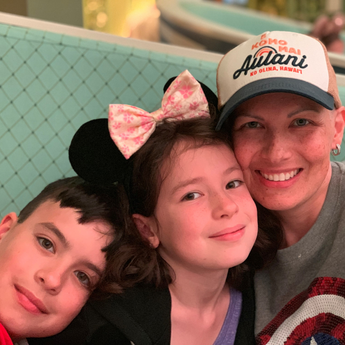 When I was diagnosed with stage III breast cancer just two weeks before my 40th birthday, I had one goal: survive.
Like many patients, I believed surviving meant accepting every treatment offered. More chemotherapy. More appointments. More interventions. Surely more treatment meant better treatment.
Then, halfway through chemotherapy, I asked a question that changed everything.
“Do I really need this last treatment? Will it meaningfully change my outcome?”
After several difficult rounds of chemotherapy, my blood counts were too low to safely receive my final infusion. I was devastated. I had been taught that fighting cancer meant doing everything possible, and suddenly I was considering doing one treatment less.
Instead of dismissing my concerns, my oncologist welcomed the conversation. He explained that chemotherapy has diminishing returns. While every situation is different, he believed stopping one treatment early was a reasonable option based on how my cancer had responded.
It wasn’t an easy decision.
My family worried. I worried. Choosing less treatment felt like breaking an unwritten rule—that if you truly wanted to survive cancer, you had to endure everything, no matter the cost.
Thankfully, my pathology results after surgery showed there was no cancer remaining.
That experience changed how I thought about treatment decisions.
Instead of asking, “What is the most treatment I can have?” I started asking, “What is the right amount of treatment for me?”
A few months later, after surgery and radiation, I was invited to participate in a clinical trial studying zoledronic acid, a medication used to reduce the risk of breast cancer returning in the bones. At the time, the standard treatment was seven infusions given every six months over three. The study asked a simple but powerful question:
Could one infusion work just as well as seven?
This type of research is called a de-escalation trial.
Unlike many clinical trials that test new drugs or more intensive treatments, de-escalation trials ask whether patients can safely receive less treatment without compromising outcomes. Their goal isn’t to reduce care—it’s to find the right amount of care, minimizing unnecessary side effects while maintaining the same effectiveness.
I’ll admit, I hesitated before joining.
I’d already made one difficult decision to receive less treatment than originally planned. Part of me wondered if I was pushing my luck. But another part of me had changed.
My goal was no longer simply to survive cancer.
It was to live well after cancer.
I enrolled in the trial and was randomly assigned to receive just one infusion.
When the study results were published years later, researchers found no clear difference in survival outcomes between patients who received one infusion and those who received the standard seven treatments. The one-infusion approach also meant fewer treatment-related side effects, fewer hospital visits, and fewer blood draws.
To someone who has never experienced cancer treatment, that may not sound like a dramatic difference.
To someone living through it, it is everything.
Every appointment requires time away from family, work, and life. Every blood draw can bring back difficult memories. Every treatment carries the possibility of side effects that can last long after cancer is gone.
That is why de-escalation research matters.
For decades, progress in cancer care often meant doing more—more surgery, more chemotherapy, more radiation. Today, research is asking a different question: can we achieve the same excellent outcomes while reducing the burden of treatment?
For many patients, that could mean spending less time in hospitals and more time living their lives.
Today, I work alongside researchers as a patient partner, helping design clinical trials and ensuring that patient perspectives are included from the beginning. Patients bring something no textbook or dataset can provide: lived experience. We understand what another infusion means. We know what another blood draw feels like. We know that quality of life isn’t separate from cancer care—it is cancer care.
If you’re facing breast cancer, I hope you’ll remember that you have every right to ask questions about your treatment options and to understand both the benefits and the burdens of every recommendation.
And if you’re ever offered the opportunity to participate in a clinical trial, I encourage you to learn more. Clinical trials don’t just lead to new treatments—they also help us discover when the right amount of treatment is enough.
To me, that’s what progress looks like.
Not doing less for the sake of doing less.
Doing enough to treat the cancer while preserving the life we’re fighting so hard to live.
You can also hear more about Beth’s experience at this CTV News story.


 Receive updates by email


